
Services
Advanced AI Screening
An AI-driven retinal screening tool that detects eye diseases and early signs of cardiovascular risk
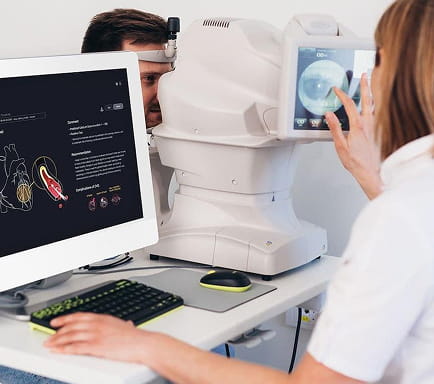
Your Eye Exam, Just Got Smarter
During your exam, you're likely already having a retinal image taken (a photo of the back of your eye).
DR.NOON uses clinically-validated AI to instantly analyze these images, for signs of eye diseases and cardiovascular risk.
Cardiovascular disease goes unnoticed too often and is usually caught when the complications begin.
Unlock your health potential, by discovering what your eyes reveal about your overall health.
No needles. No discomfort. No added procedures.
What Can It Detect?
EYE INSIGHTS
Diabetic Retinopathy
Damage to the retina caused by high blood sugar
Glaucoma
Increased pressure in the eye that can damage the optic nerve
Macular Degeneration
Gradual loss of central vision, often age-related
Cataracts
Clouding of the eye's lens, causing blurry vision
96% DIAGNOSTIC ACCURACY
COMPARABLE TO REAL LIFE OPTHALMOLOGISTS
HEART INSIGHTS
Hypertension (High Blood Pressure)
Often has no symptoms but strains the heart over time
Atherosclerosis
Narrowing or hardening of the arteries due to plaque buildup
Arterial Stiffness & Coronary Risk
Reduced flexibility in arteries, linked to heart attack risk
Early signs of cardiovascular stress
Subtle changes in blood vessels that signal increased heart risk
CVD DIAGNOSTIC OUTPERFORMS
TRADITIONAL HOSPITAL METHODS IN 5 YEAR PREDICTION
How Often Should You Have An Eye Exam?
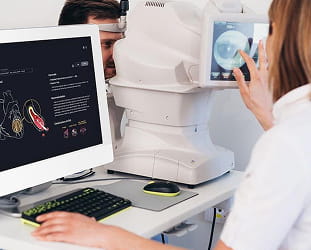
STEP 1 - CAPTURE
Your eye care professional takes a quick photo of the back of your eye with a specialized camera.
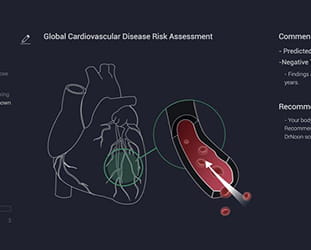
STEP 2 - REVIEW
DR. NOON’s AI analyses these images instantly to give you predictive scoring.
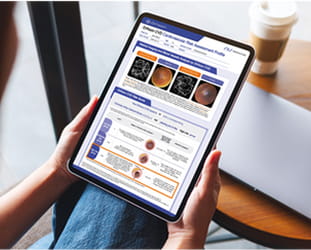
STEP 3 - REPORT
A clear and personalized report is generated with your eye and heart health.
FAQs
DR. NOON CVD is an AI-powered screening tool that evaluates your personalised risk of cardiovascular disease (CVD) simply by analysing retinal photographs. It is validated and approved by the MHRA for clinical use in the UK (and in other territories).
Your retina is one of few places in the body where blood vessels can be directly observed. The blood vessels at the back of your eye seen directly with a specific type of camera (fundus camera)—without the need for needles. Arteries carry blood away from your heart to organs throughout your body. If those small vessels in your retina start to narrow or show signs of damage, it often means similar changes are happening in other arteries— such as those supplying your heart. As a result, your eyes are a window into your heart.
Retinal Imaging: Your optometrist or trained technician takes a quick digital photograph of each eye using a standard fundus camera (no dilating drops or special preparation is required).
AI Analysis: The images are securely uploaded to a cloud platform. DR. NOON’s AI instantly analyses these images to give your predictive scoring. Deep-learning algorithms detect subtle changes in the tiny blood vessels of your retina. These microvascular patterns correlate closely with arterial health elsewhere in your body—including the coronary arteries.
Risk Estimation: You will receive a clear and personalized report with practical advice is generated, that you will review with your practitioner. By comparing your retinal-vessel characteristics against a database of several hundred thousand patients (including the UK Biobank cohort), the system produces a personalised five-year CVD risk score.
Yes – DR.NOON is backed by rigorous clinical research and validated in peer-reviewed publications:
Clinically Validated: Publications in world-leading journals including The Lancet Digital Health and JAMIA demonstrate that DR. NOON’s performance in predicting CVD risk is on par with (and in many cases more convenient than) CT-based calcium scoring.
Large, Diverse Data: Trained on hundreds of thousands of retinal images from patients of all ethnicities, the algorithm has been thoroughly tested across multiple cohorts (e.g. UK Biobank, CMERC-HI).
MHRA Approval: To gain UK regulatory clearance, Dr Noon was required to demonstrate clinical effectiveness and safety in prospective trials.
Because DR. NOON measures vessel changes directly (rather than calcium), it can reflect risk modifications arising from lifestyle or medication more dynamically than CT.
Yes - It’s painless, non-invasive, and suitable for most patients:
- Non-Invasive & Painless: No needles, no blood draws, no ionising radiation.
- No Contrast Agents: Unlike some CT protocols, there is no risk to kidney function.
- Suitable for All: Even patients with mild cataracts or stable glasses prescriptions can be imaged (as long as fundus photographs are clear).
- Repeatable at Zero Risk: Safe for follow-up scans as often as clinically required—ideal for monitoring changes over time.
DR.NOON will provide a recommended follow-up schedule in your personalized report. If your results indicate medium or high risk, or if you are feeling unwell, then please follow the guidance of your healthcare provider.
At HeartEye we take data privacy seriously. All retinal images and personal data are encrypted in transit and at rest, stored on secure servers compliant with GDPR and HIPAA (where applicable). Only authorised personnel and your clinician can access your report.
No. DR. NOON CVD is designed as a complementary screening tool. It adds unique, non-invasive insights into vascular health but does not measure cholesterol or electrical cardiac activity. Your GP may still recommend full blood panels, ECGs or imaging if indicated.